Logo of Dr. Karim Ben Ghezala, spine neurosurgeon
Home
Treatments
AboutBlogContact
ES/EN/DE
Book Appointment
Book Appointment
Home
AboutBlogContact
ES/EN/DE
Logo of Dr. Karim Ben Ghezala, spine neurosurgeon

Neurosurgeon specialized in spinal disorders, with over 20 years of experience in the diagnosis and treatment of complex spine conditions.

NAVIGATION

  • Home
  • Treatments
  • About Dr. Ben Ghezala
  • Blog
  • Contact

TREATMENTS

  • Cervical spine
  • Thoracic spine
  • Lumbar spine
  • General spinal conditions
  • Advanced techniques
  • Pain surgery

CONTACT

  • NeuroKlinik Alicante

    Hospital Vithas Medimar

    Calle Padre Arrupe, 03016 Alicante

    965 26 90 74 (Reception)
    965 16 22 00 (Emergency)
  • Hospital Clínica Benidorm (HCB)

    Avenida Alfonso Puchades 8

    Hospital Clínica Benidorm, 03501 Benidorm

    965 85 38 50 ext. 5520 (Receptionist)
    965 85 38 50 (Emergency)
  • info@neuroklinik.es

The information on this website is for guidance only and does not in any case replace an individual medical assessment. For any decision about your health, always consult a specialist.

© 2026 Dr. Karim Ben Ghezala

Legal noticePrivacy policyCookie policy
Treatment catalogue

Spine treatments in
Alicante and Benidorm

Explore Dr. Karim Ben Ghezala's spine treatments. In each treatment, you will find clear information about its indication, what it involves, and what to expect from the process, with a patient-centered medical approach.

Precise diagnosis
Safe techniques
Fast recovery
Book appointment
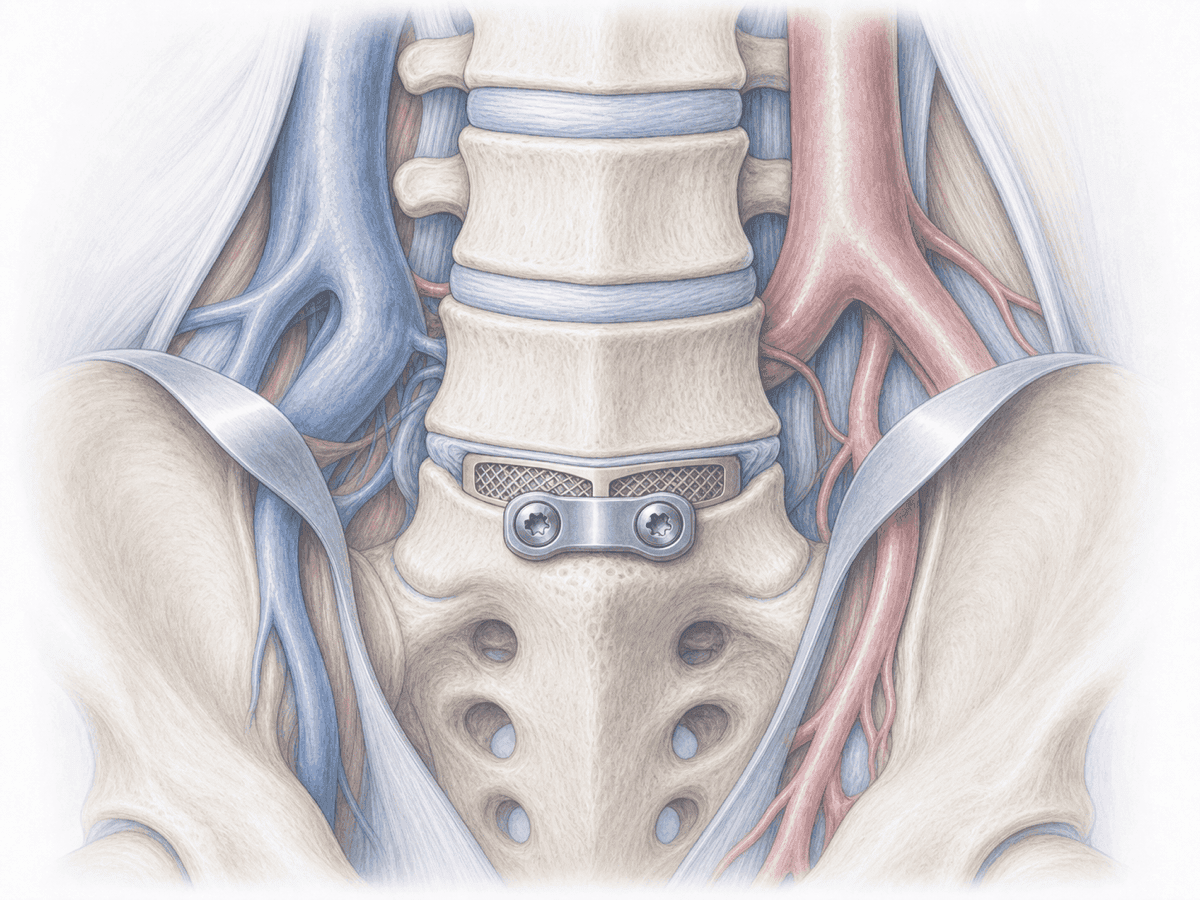
Anterior lumbar interbody fusion (ALIF) illustration showing the interbody cage at L5-S1 via an anterior retroperitoneal approach.
Lumbar spine

ALIF — Anterior lumbar interbody fusion

Lumbar fusion performed through the abdomen, in collaboration with a vascular surgeon, allowing indirect decompression, restoration of disc height and lordosis and segmental stabilisation, particularly at L5-S1.

View treatment
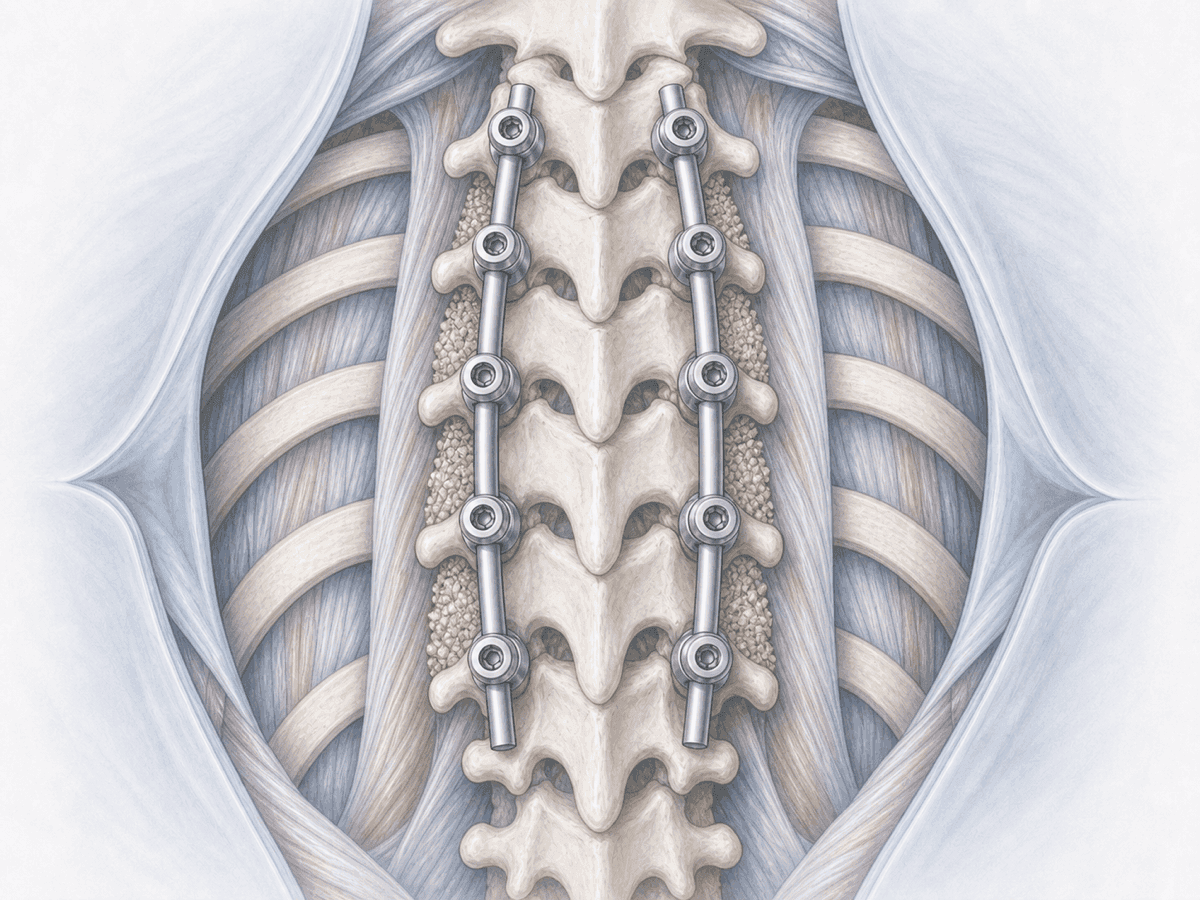
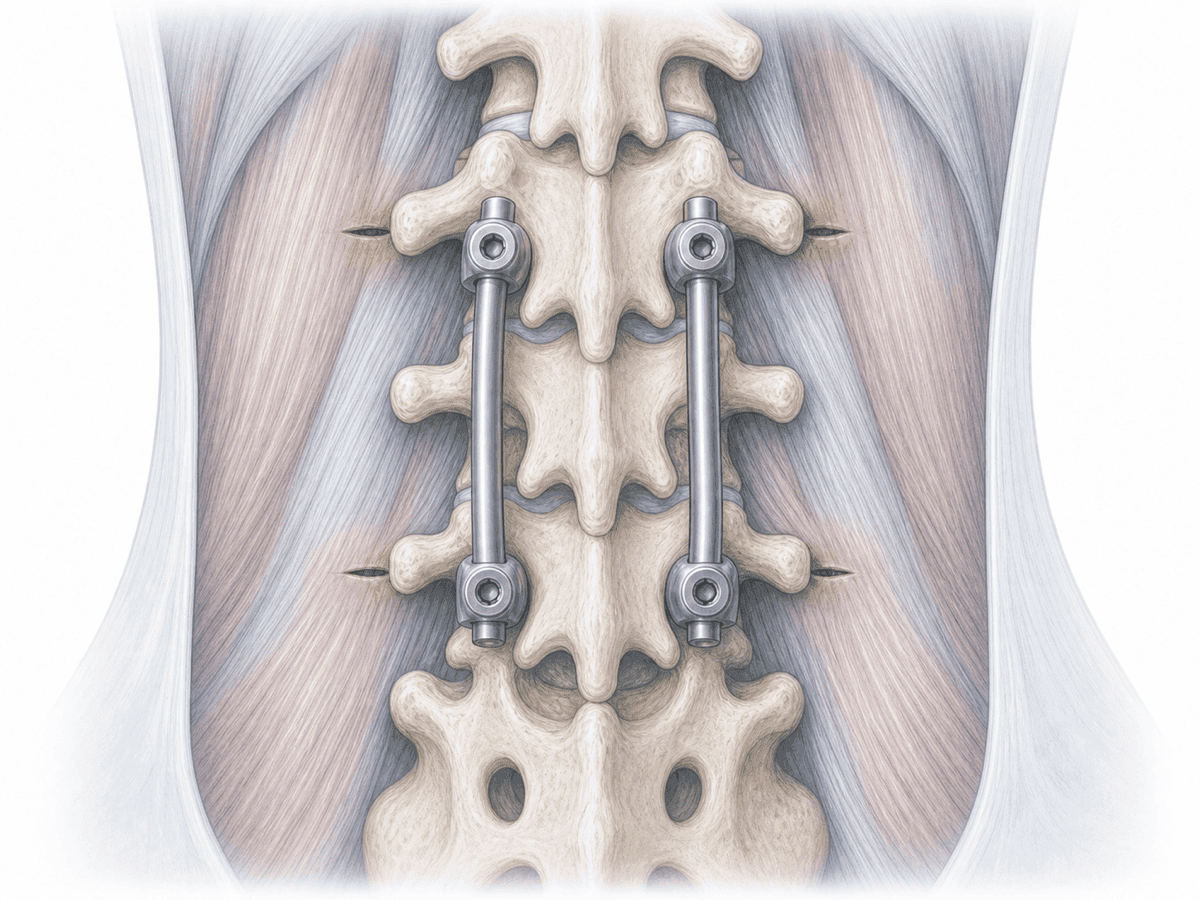
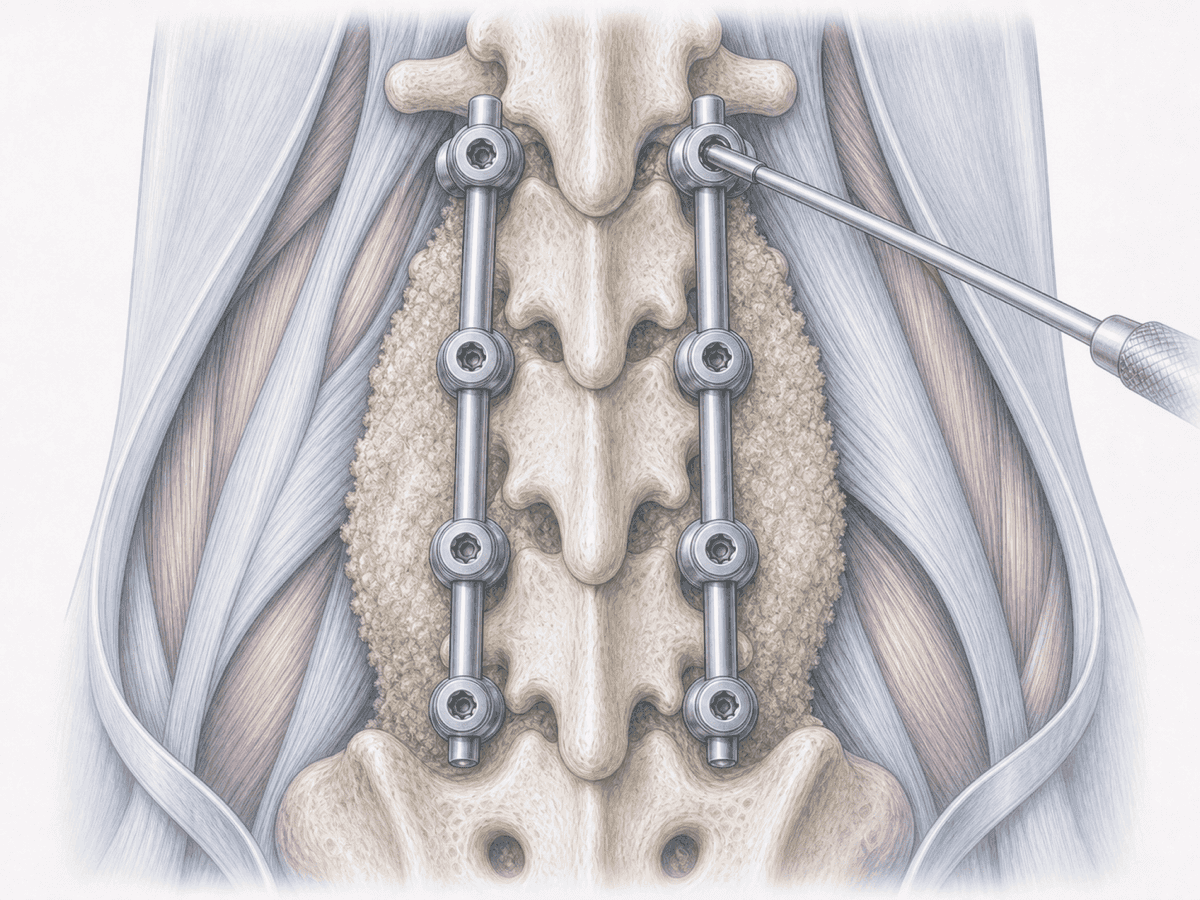
Illustration of minimally invasive lumbar fusion showing percutaneous pedicular screws and rods placed through small skin incisions.
Lumbar spine

Minimally invasive lumbar fusion

Lumbar fusion performed through small incisions with image-guided percutaneous pedicular screws, offering less blood loss and a faster recovery than open surgery.

View treatment
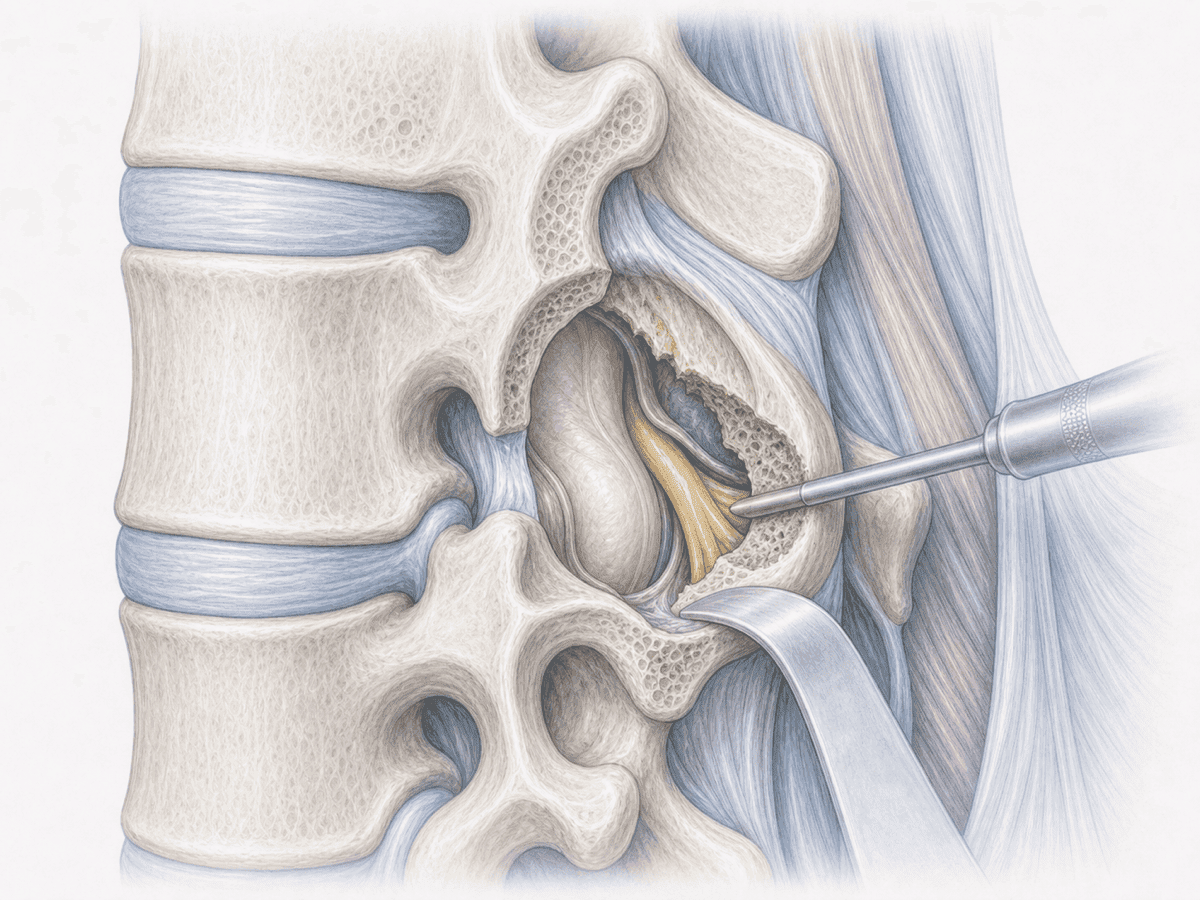
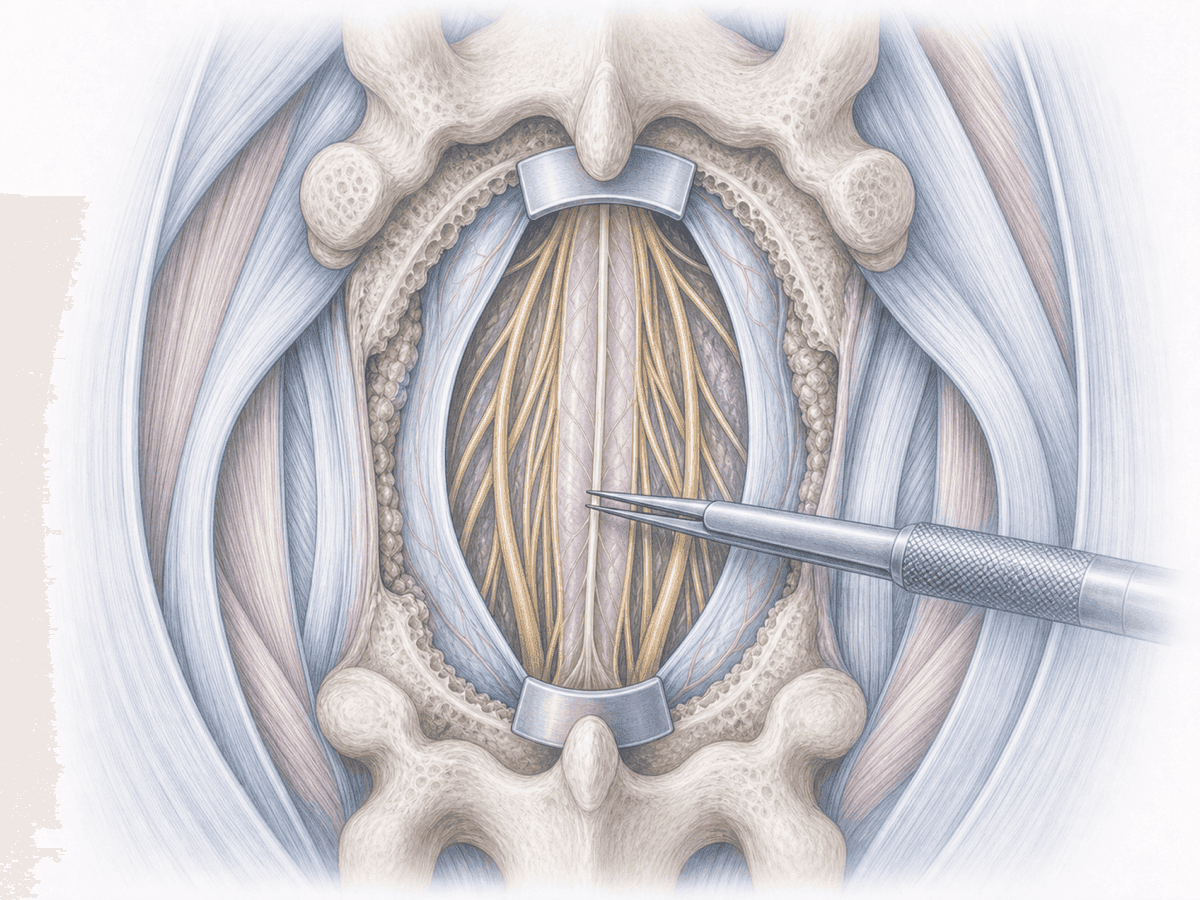
Illustration of lumbar lateral recess decompression with microsurgical undercutting, freeing the nerve root while preserving the facet joint.
Lumbar spine

Lateral recess decompression

Lumbar microsurgery that frees the entrapped nerve root in the lateral recess while preserving the facet joint, relieving radicular pain and neurogenic claudication.

View treatment
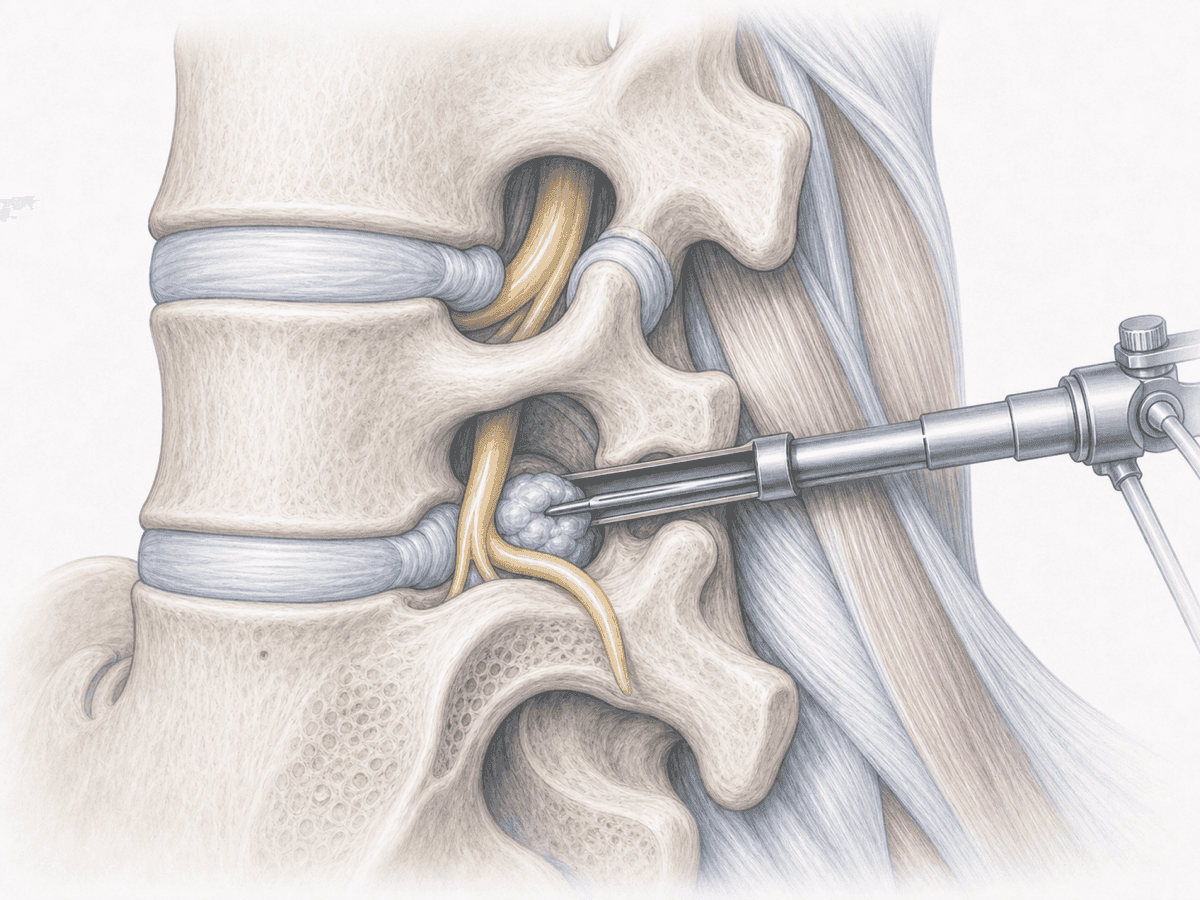
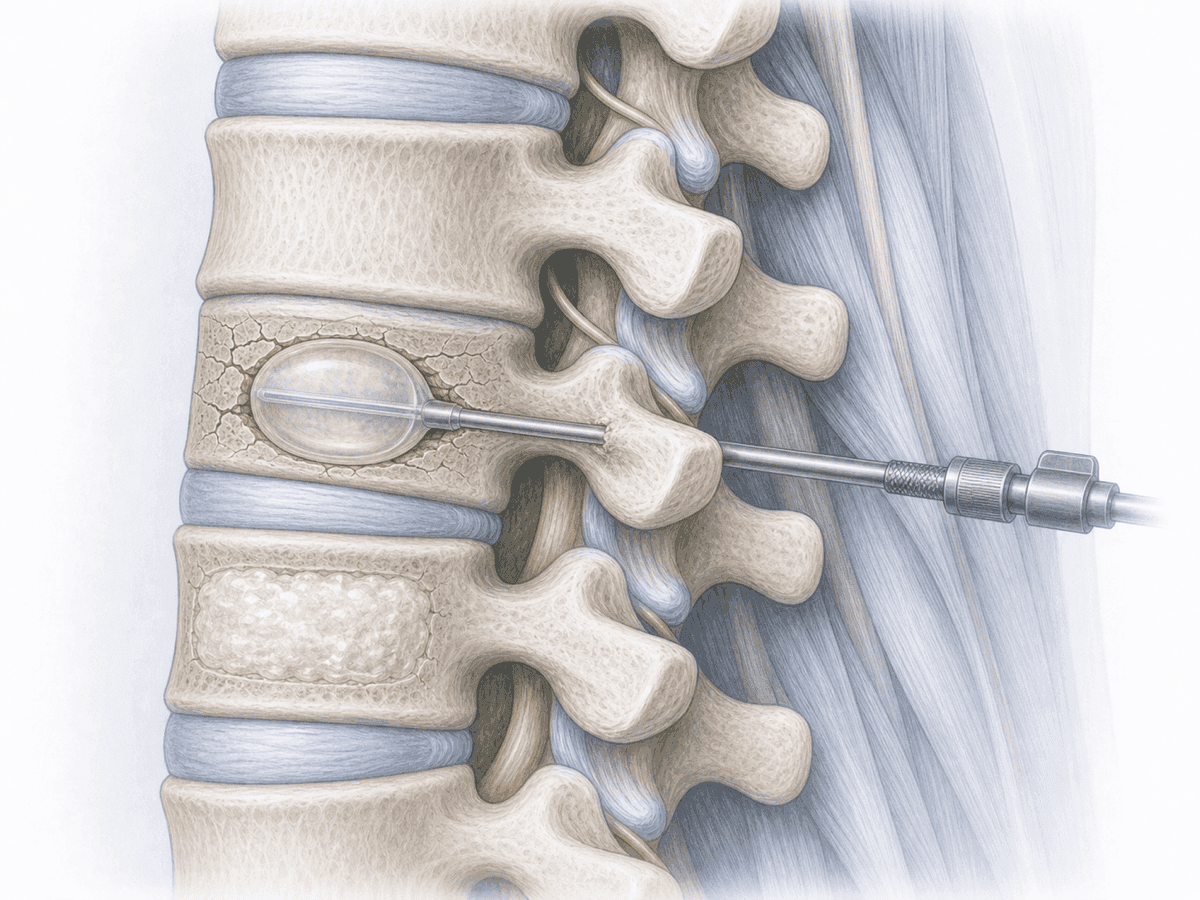
Endoscopic lumbar discectomy illustration: transforaminal endoscope removing an L5-S1 disc herniation through a 7 mm incision.
Lumbar spine

Endoscopic lumbar discectomy

Minimally invasive surgery that removes a lumbar disc herniation through a 7-8 mm incision with an endoscope, under local anaesthesia or sedation, with same-day discharge.

View treatment
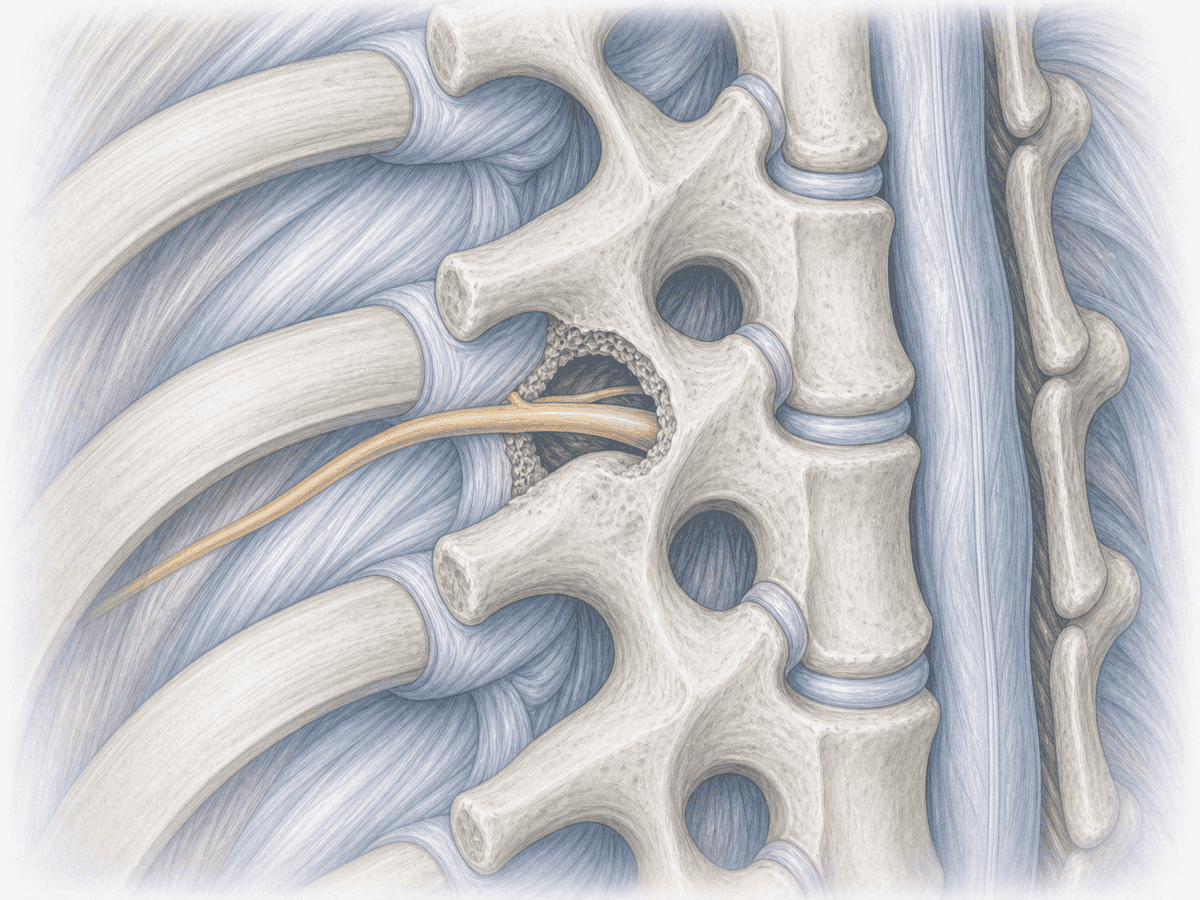
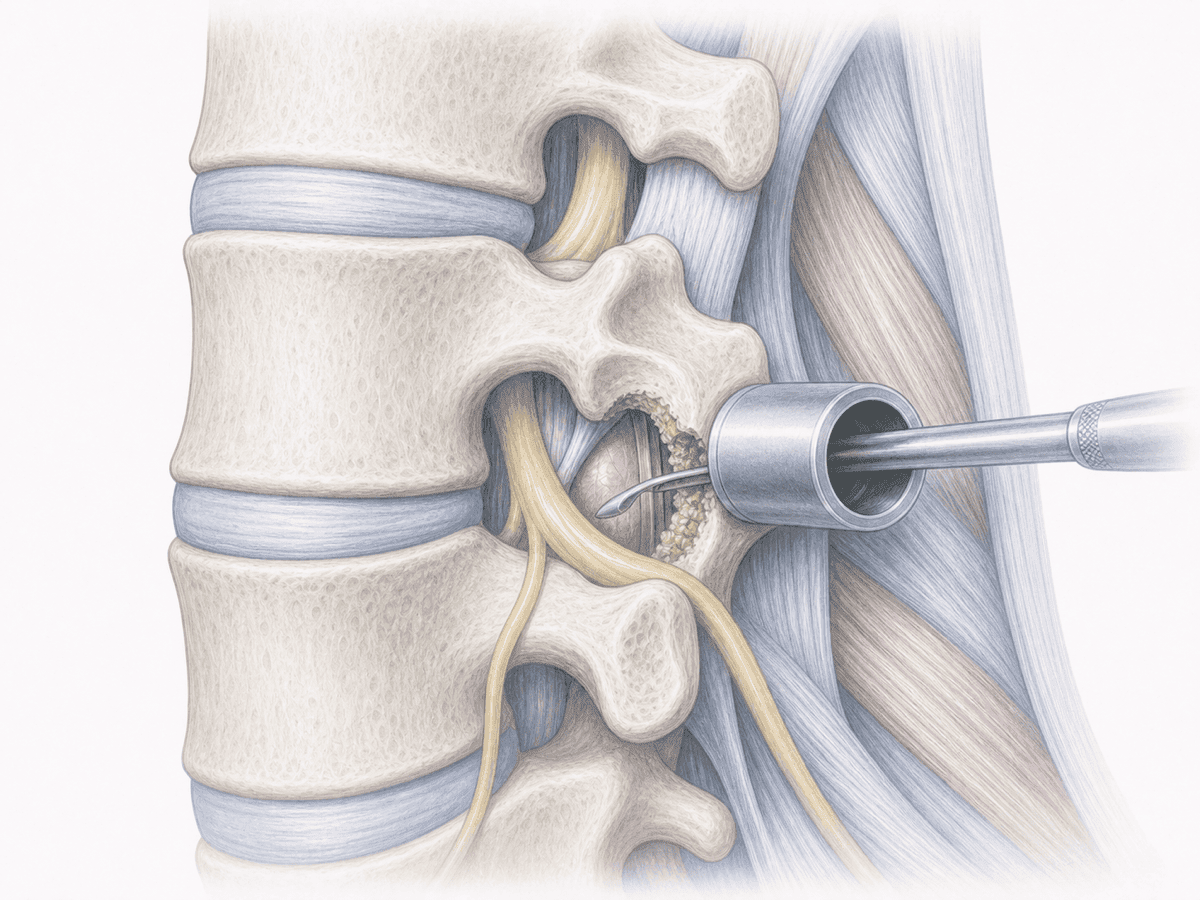
Lumbar foraminotomy illustration: widening of the lumbar foramen to free the compressed nerve root while preserving the facet joint.
Lumbar spine

Lumbar foraminotomy

Minimally invasive lumbar surgery that widens the intervertebral foramen to free a compressed nerve root, preserving the facet joint and avoiding fusion.

View treatment
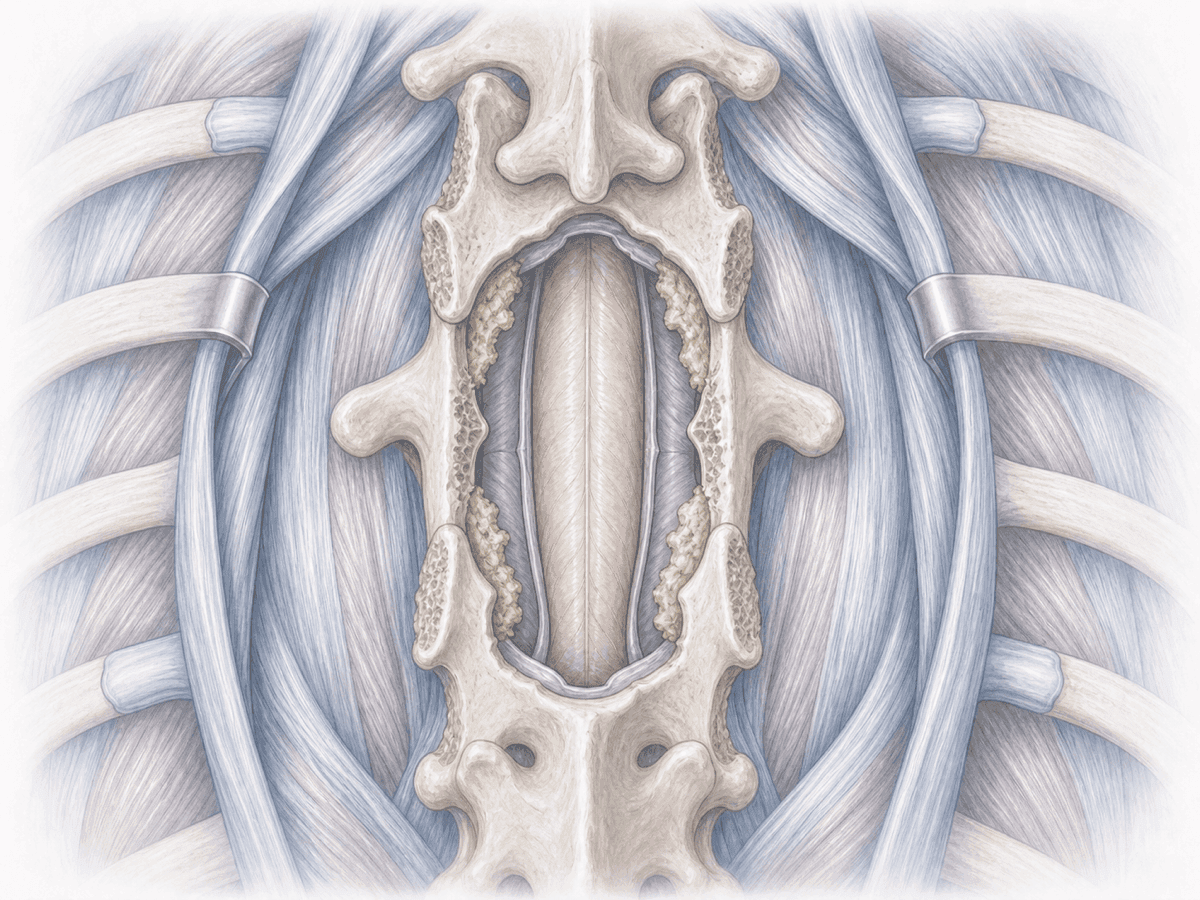
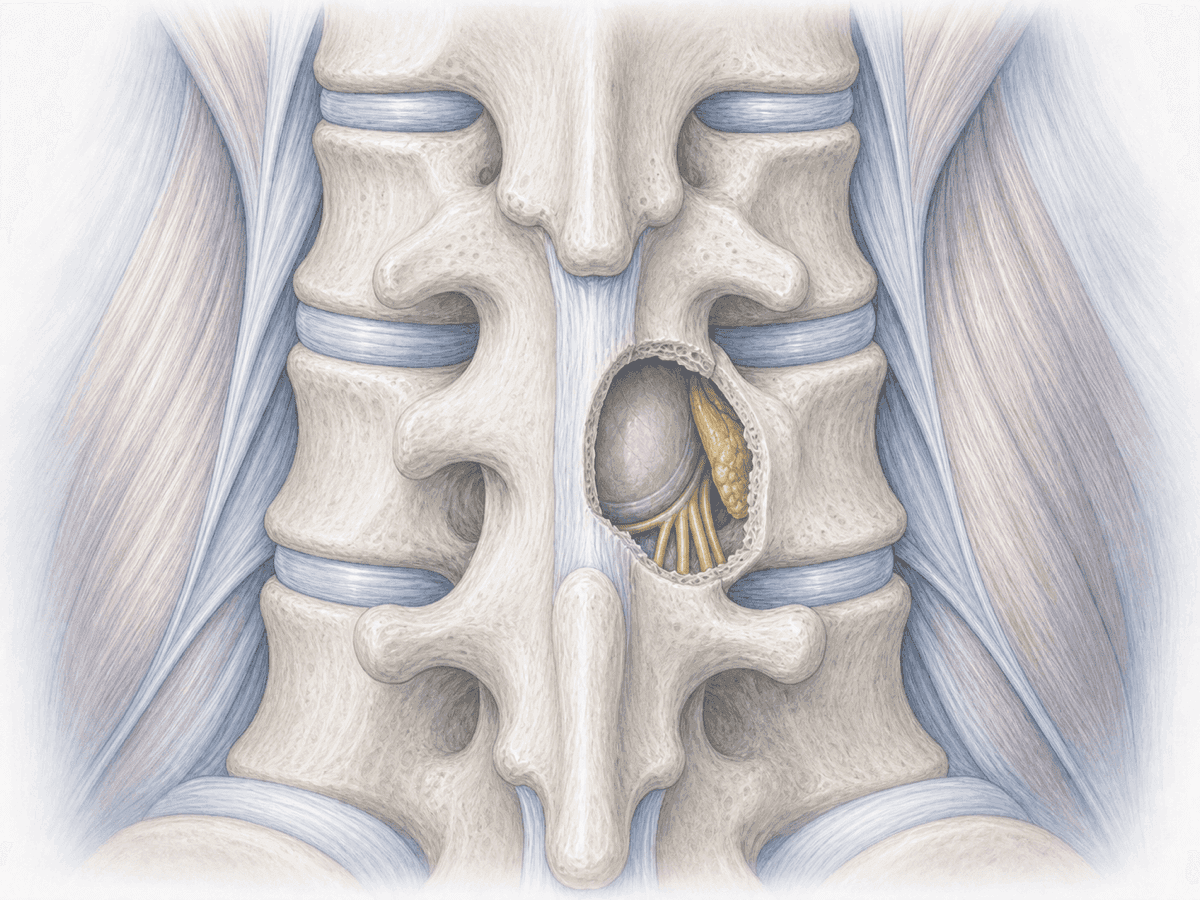
Lumbar laminotomy illustration: partial opening of the lamina preserving the spinous process to decompress a stenotic lumbar canal.
Lumbar spine

Lumbar laminotomy

A limited lumbar decompression that opens part of the lamina while preserving the spinous process and midline ligaments to relieve canal stenosis without the need for fusion.

View treatment
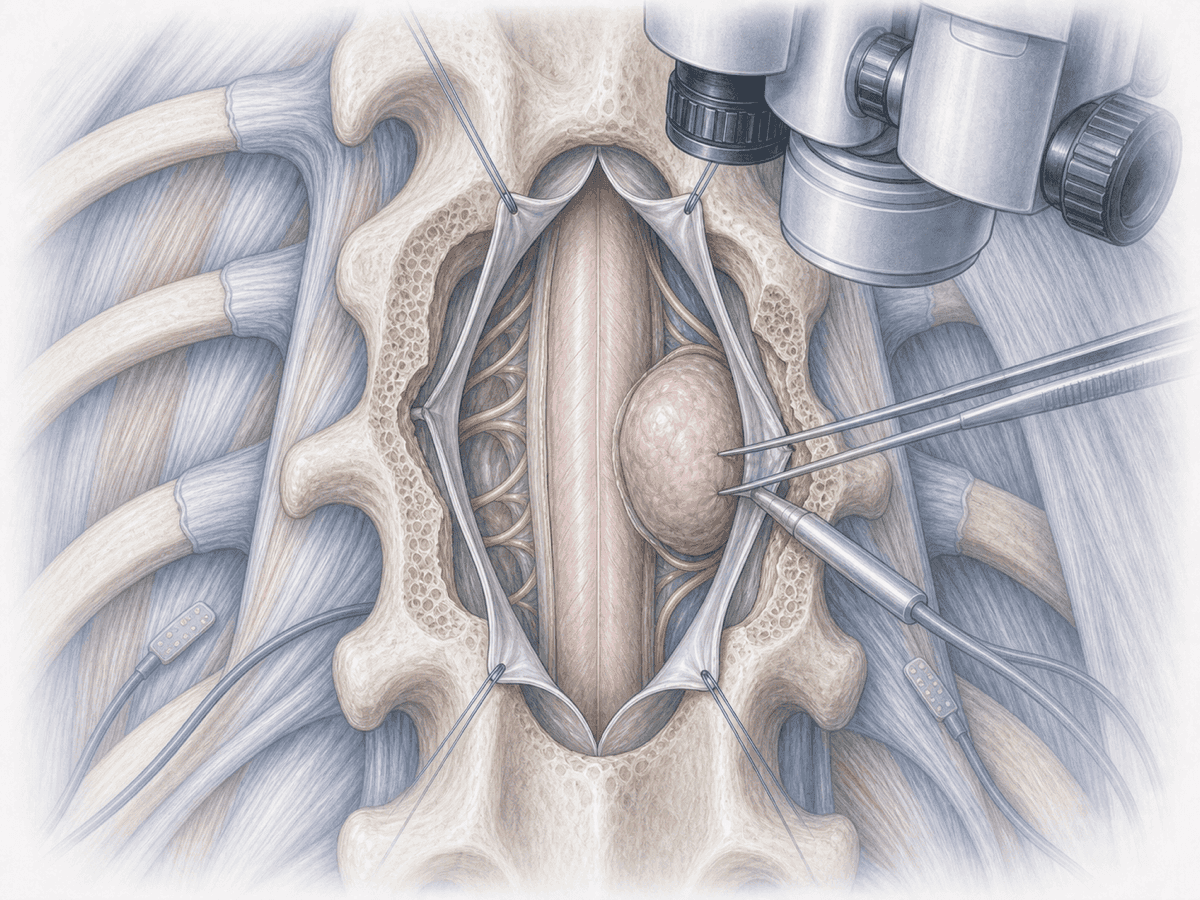
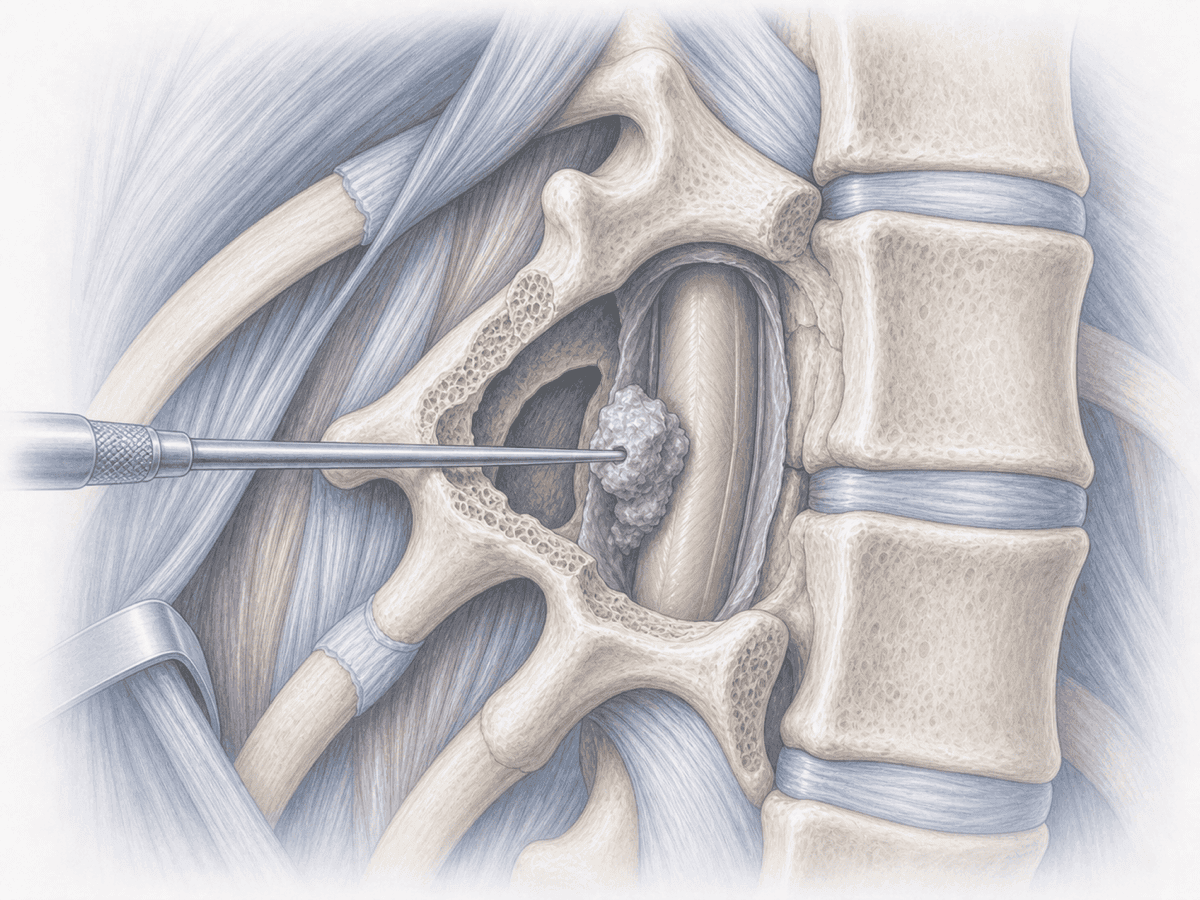
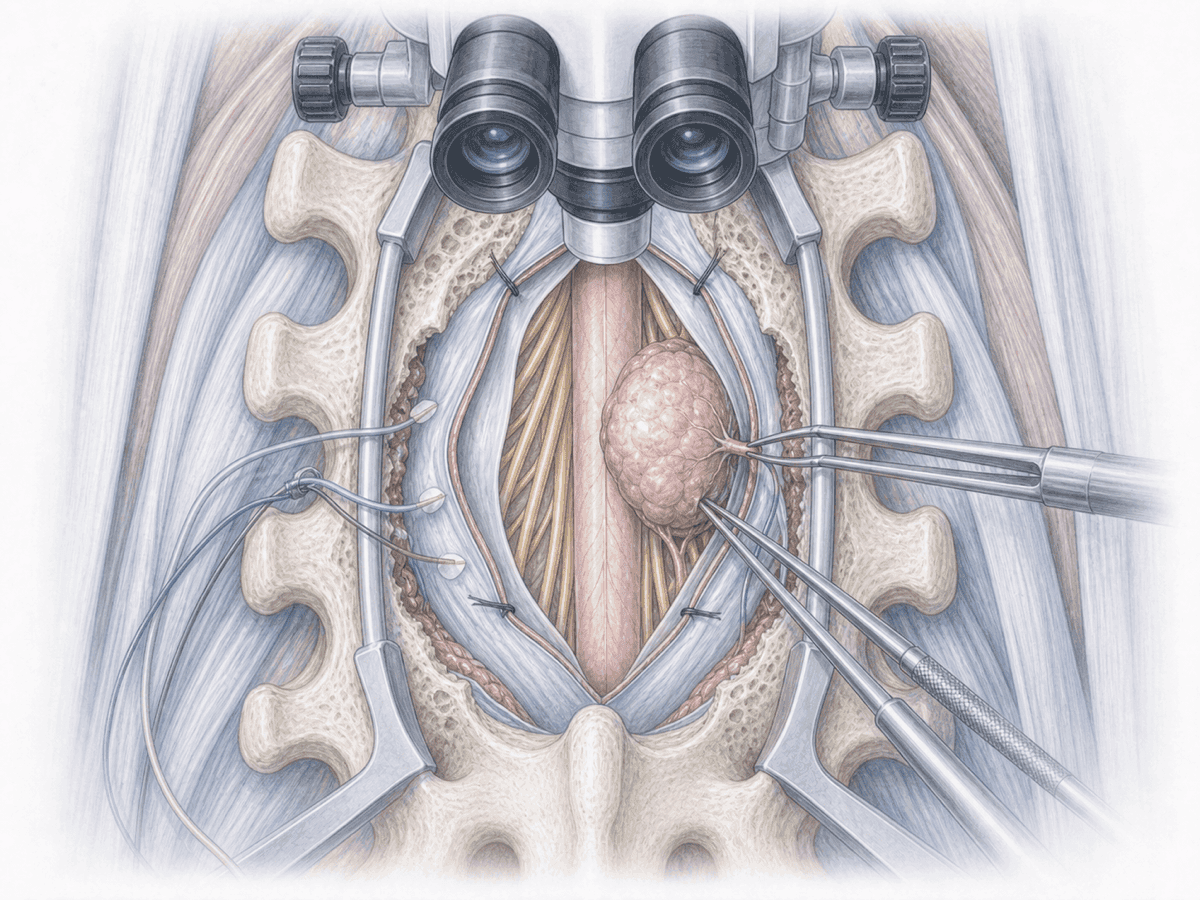
Lumbar microdiscectomy illustration: microsurgery with a tubular retractor removing an L5-S1 disc herniation fragment compressing the nerve root.
Lumbar spine

Lumbar microdiscectomy

Microsurgical procedure that removes the lumbar disc herniation fragment compressing the nerve root, relieving sciatica and leg weakness.

View treatment
Illustration of a posterior lumbar interbody fusion (PLIF) showing two interbody cages, pedicle screws and rods stabilising the segment from the back.
Lumbar spine

Posterior lumbar interbody fusion (PLIF)

Lumbar fusion through a posterior approach with two interbody cages and pedicle screws to decompress the nerve roots and stabilise a painful or unstable segment.

View treatment
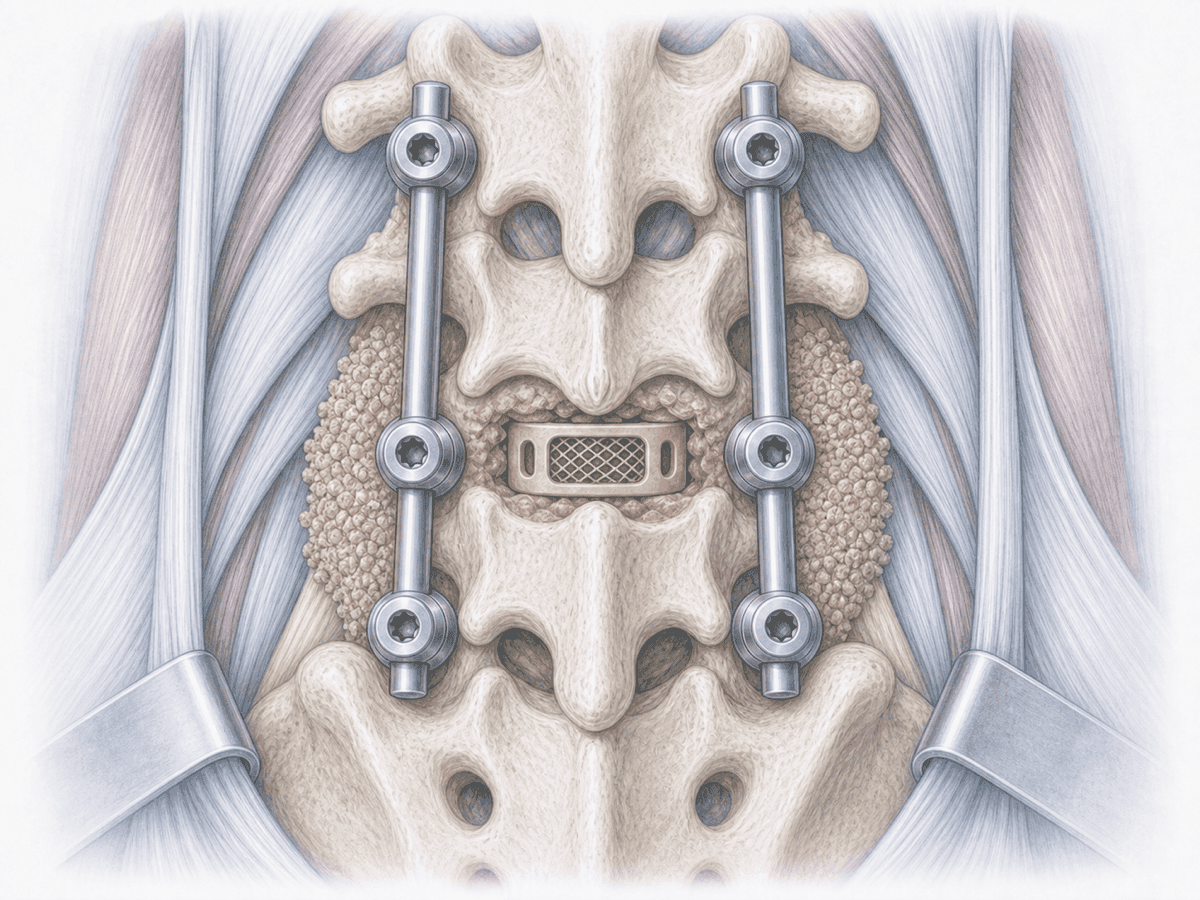
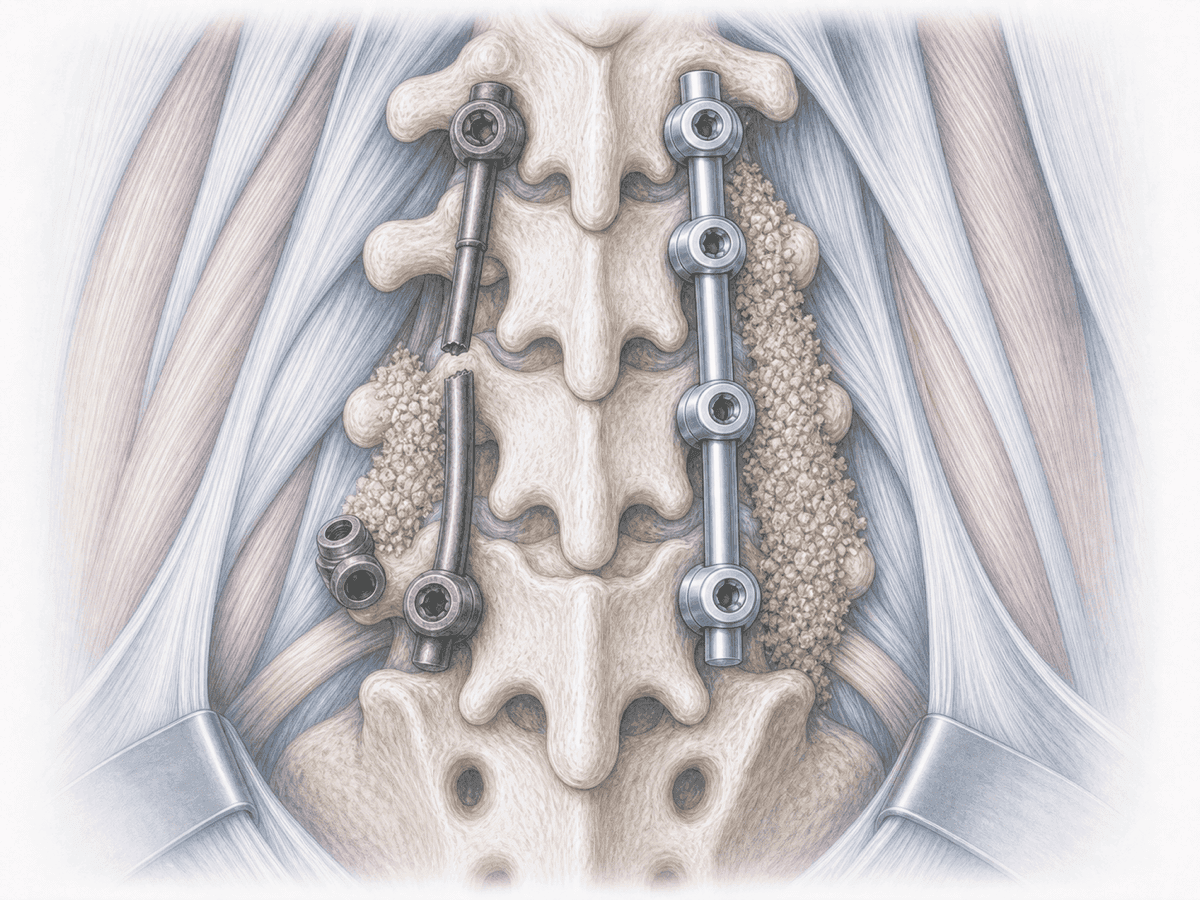
Illustration of lumbar revision surgery with posterior reinforcement, pedicle screw re-instrumentation and bone graft after a failed lumbar fusion with pseudarthrosis.
Lumbar spine

Failed lumbar fusion revision (lumbar pseudarthrosis)

Salvage surgery for a lumbar fusion that has not consolidated or whose hardware has loosened, with persistent mechanical pain or new neurological symptoms. Individualised planning by a posterior, anterior or circumferential approach.

View treatment
TLIF illustration at L4-L5 with an interbody cage placed through the foramen and pedicle screws connected by rods.
Lumbar spine

TLIF — Transforaminal lumbar interbody fusion

Lumbar fusion performed through a posterolateral approach via the foramen that decompresses the nerve root, places an interbody cage and stabilises with pedicle screws.

View treatment
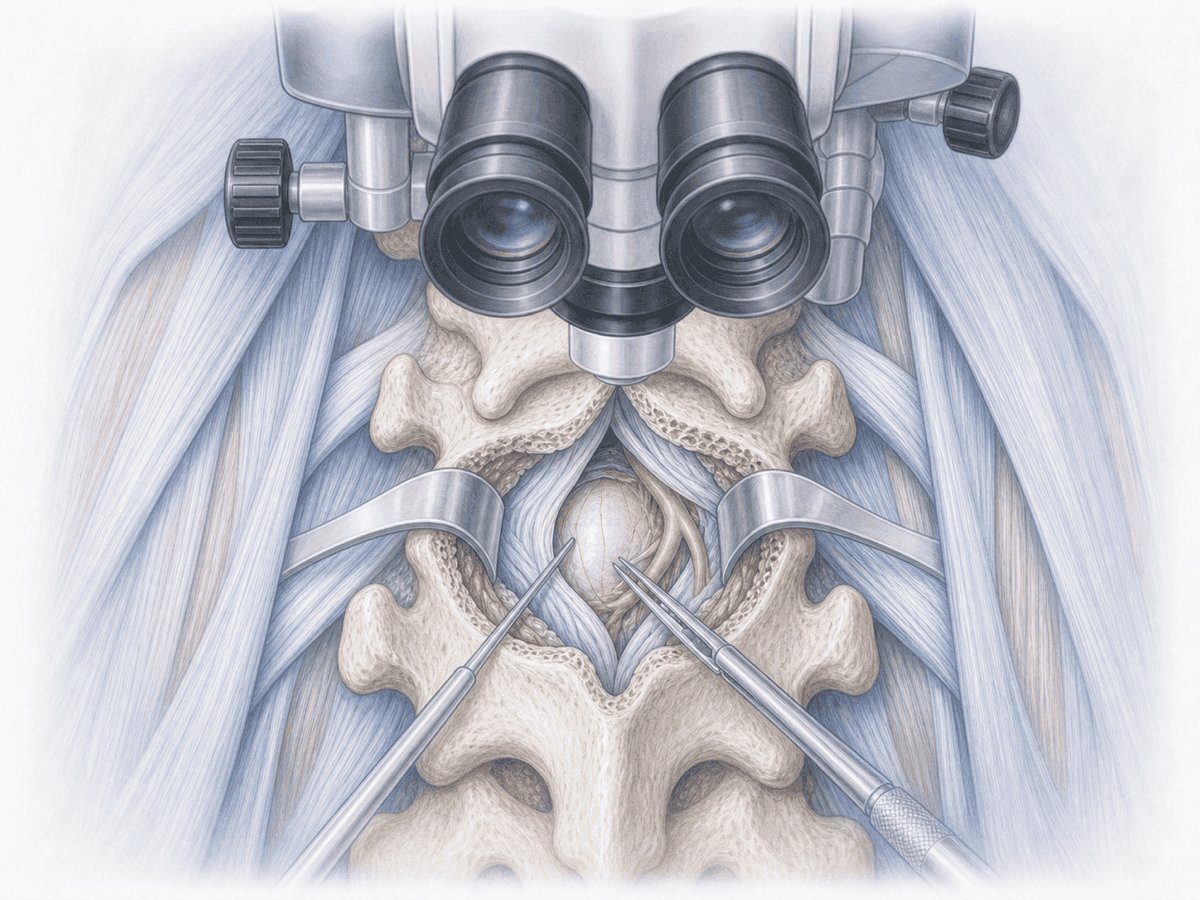
Illustration of XLIF/LLIF/OLIF lateral lumbar fusion at L3-L4 with a wide interbody cage placed through the transpsoas lateral approach.
Lumbar spine

XLIF / LLIF / OLIF — Lateral and oblique interbody fusions

Minimally invasive lumbar fusion via a lateral (XLIF/LLIF) or oblique (OLIF) approach that restores disc height and lordosis with a wide cage while sparing the posterior muscles.

View treatment
Do these symptoms sound familiar?

If you recognise yourself in some of these symptoms and your pain is starting to limit your daily life, we can review your case in a personalised consultation. Dr. Ben Ghezala will assess your clinical history and imaging studies to help you decide the best treatment option for you.
Request a consultation with Dr. Ben Ghezala